
Piscina Mirabilis Art Museum
transforms ancient roman cistern into contemporary art museum in italy
Piscina Mirabilis was a freshwater cistern situated on the Bacoli cliff at the western end of the Gulf of Naples, in southern Italy. It was one of the largest freshwater cisterns constructed by the ancient Romans and served to provide drinking water to the Roman western imperial fleet at Portus Julius. Additionally, Piscina Mirabilis was a Roman reservoir built by Emperor Augustus in the 1st century AD.
After two millennia, Piscina Mirabilis stands as a magnificent architectural marvel of the ancient world. Thanks to Emperor Augustus, these grand structures continue to be admired today, forever serving as a source of pride for Italy. When discussing Emperor Augustus and Piscina Mirabilis, one cannot overlook the significance of Julius Caesar, a Roman general and statesman who played a pivotal role in the transformation from the Roman Republic to the Roman Empire. Therefore, Julius Caesar becomes an important element in this new museum.
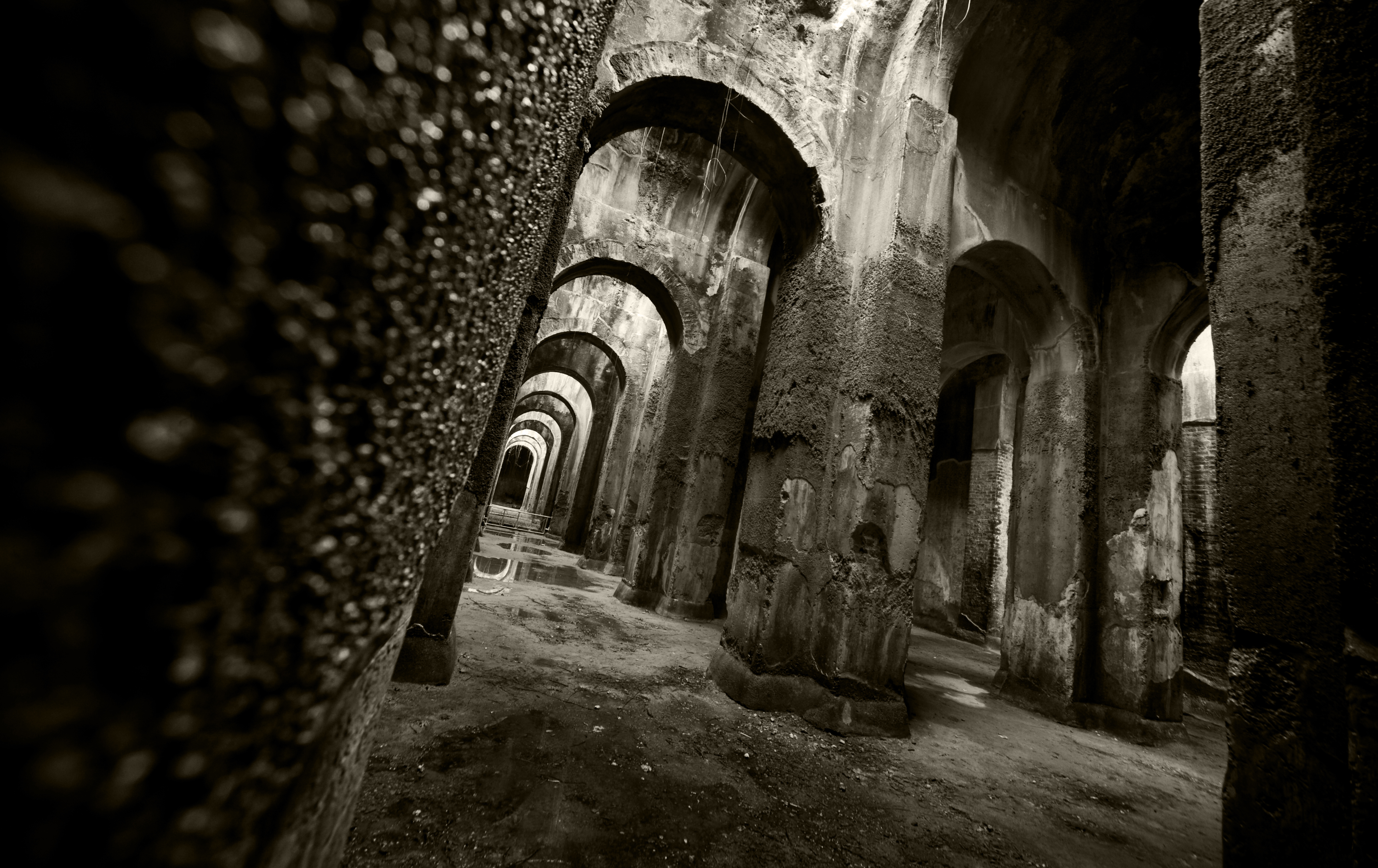
However, there arises a question of how to balance the design of the ancient Piscina Mirabilis with the new contemporary art museum. The transition from a reservoir to a modern museum spans almost two millennia, and each minute counts. Hence, we found inspiration in “TIME” itself. Regardless of the past, present, or future, Piscina Mirabilis holds historical importance for people all around the world, always remaining a symbol of the Roman Empire spirit in the hearts of Italians.
We all understand the significance of “TIME” in our lives. Every year, every month, and every day carries importance. Thus, we drew parallels between the “Julian Calendar,” proposed by Julius Caesar in 46 BC as a reform of the Roman calendar, and the story of Piscina Mirabilis. We believe that the Julian Calendar and Piscina Mirabilis share the same essence, and they serve as a testament to Italy’s rich legacy.
As a result, “Julian Calendar” became the overall design concept and the story.
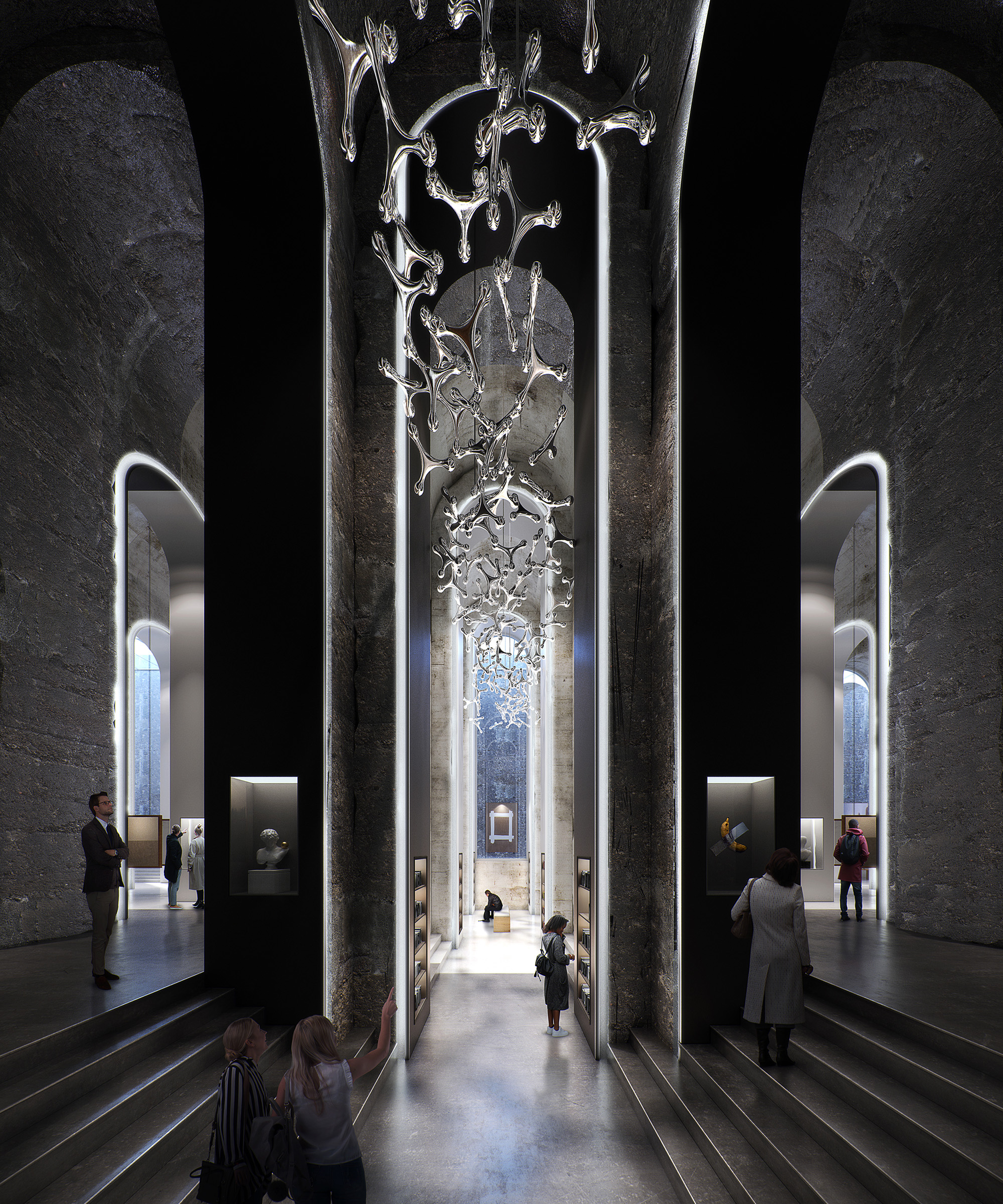
January is named after the Roman god Janus, depicted with two faces looking into the past and the future, just like Piscina Mirabilis representing the past and the new art museum symbolizing the future. When visitors enter the museum, they will be reminded that this place was once a reservoir, and they can take pride in its magnificent architecture. The museum is divided into two zones, the white zone representing the past and the black zone representing the future.

April is derived from the Latin word “Aperio,” signifying the beginning of plant growth in spring’s renewal. May is named after the Roman goddess Maia, who oversees plant growth. Thus, plants and flowers adorn the bar area.
July was named in honor of Julius Caesar in 44 BC, and August was named to commemorate Augustus Caesar. The spirit of these historical figures is infused into the new museum.


Regarding artworks and artists, the white zone mainly focuses on paintings and artists such as EUGENIA VANNI, Francesco Clemente, and Serena Vestrucci. The black zone emphasizes sculptures, including works by Willy Verginer, VALERIO BERRUTI, and Arcangelo Sassolino. Finally, after visiting the museum, audiences will have gained a deeper understanding of Italian artists and art. Simultaneously, they can take pride in their history, celebrating Caesar and Augustus. In the future, it is hoped that Piscina Mirabilis will be preserved for eternity, remaining a meaningful place for everyone.

The Artworks
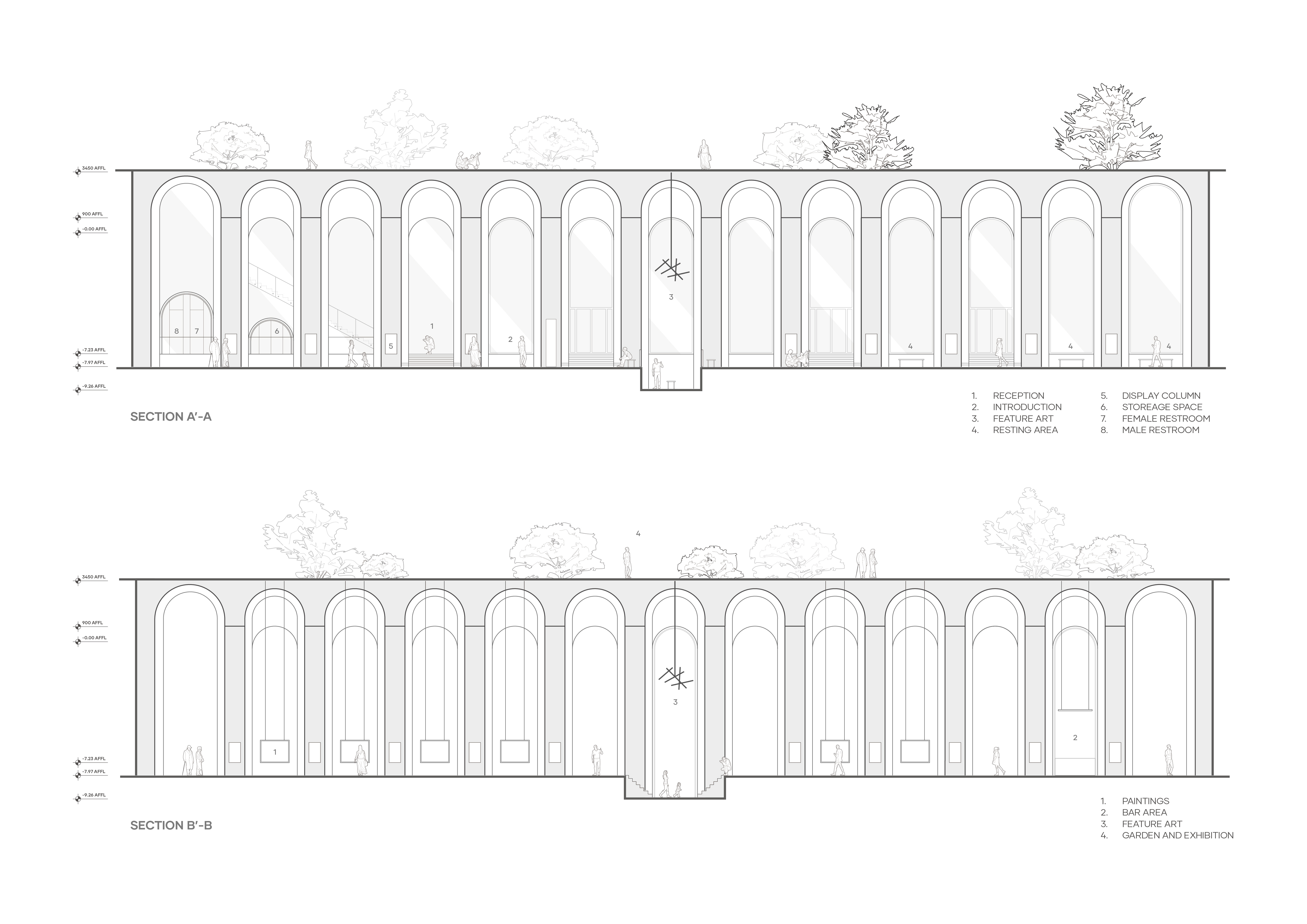
The artwork planning in the new museum is straightforward, divided into five main parts. Path A focuses on paintings, Path B showcases small sculptures, Path C displays large sculptures, Path D features a hanging sculpture by Loris Cecchini, and the majority of pillars are redesigned as new design columns.
As for the museum’s circulation, there are three main routes for visitors. They will follow the red path from the entrance, then walk through the path between small and large sculptures in the black zone. After that, they can return to the green path, which primarily showcases paintings, leading to the bar area. The middle path, represented in blue, is the bookshop area, where visitors can take a break and read some books.
Project Information
Year : 2020
Type : Competition
Client : Re-use Italy
Location : Piscina Mirabilis, Bacoli, Naples, Italy
Area : 1,450 sq.m.
Status : Concept
Partner in Charge : Gavin Leung
Fellow in Charge : –
Project Leader : –
Design Team : –
Images : Bagua+Bhava & Internet
Visualisations : Bagua+Bhava & Essanze Visual
Awards : –
About us
Get in touch
Follow us
Subscribe the newsletter
© Copyright 2024 Bagua+Bhava. All Rights Reserved.
 Bagua+Bhava. Interior Design Practice